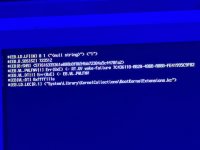
Well there is your first issue, you used OpenCore Simplify to create an EFI for an AMD system. That is probably the worst way to create an EFI for an AM5 system, as it doesn't understand or take in to account the requirements for a modern AMD Hack.
Which Samsung 500GB SSD? NVME or SATA drive, make and model of the drive?
Is there anything currently on the Samsung drive, such as Windows or linux?
Your config.plist doesn't validate with no errors when tested against ocvalidate for OC 1.0.7 or 1.0.8. The screenshot below shows the errors present in your config.plist from the OC 1.0.7 ocvalidate script.
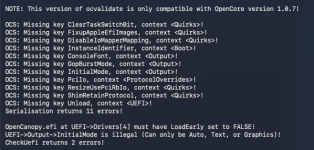
These are the errors when your config.plist is tested against OC 1.0.8.

The NVRAM section in your config.plist is a bit of a mess. You seem to have combined two of the Add sections, so the 'DefaultBackgroundColour' entry is in with the 'etc-blacklist' and RestrictEvents entries. Same goes for the Delete section. This isn't how any OpenCore config.plist is created.

Your current NVRAM > Add & Delete sections.
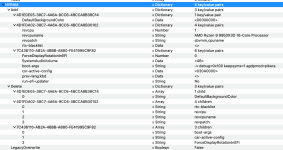
The correct order for the NVRAM > Add & Delete sections.
I have edited your config.plist to take the issues listed above in to account.
Your UTBMap.kext is a mess, it doesn't conform to the expected USB port configuration for a motherboard with 5 x USB controllers and the following USB ports available.
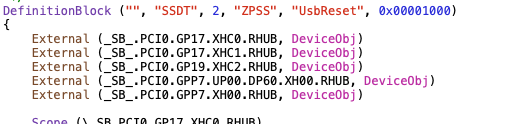
USB controllers listed in your SSDT-USB-Reset.aml table.
USB ports available from your Asus ROG STRIX X870-A Gaming motherboard:
Rear USB (Total 12 physical ports (plus 12 x Virtual USB ports))
2 x USB4® (40Gbps) ports(2 x USB Type-C® with DP Alt mode)
6 x USB 10Gbps ports (5 x Type-A + 1 x USB Type-C
4 x USB 5Gbps ports (4 x Type-A)
Front USB (Total 9 ports from motherboard headers)
1 x USB 20Gbps connector/Header (supports USB Type-C®)
2 x USB 5Gbps headers support 4 additional USB 5Gbps ports
2 x USB 2.0 headers support 4 additional USB 2.0 ports
You do not have any USB2.0 physical ports on the rear I/O plate, so you shouldn't have any ports set with connector type USB2 (0) in your UTBMap.kext. Any USB2 virtual ports, i.e. USB2 ports served from a USB3 or Type-C port should be set to match the physical port, USB3 (3) or Type-c (9) or (10). They should never be set as USB2 physical ports (0)..
You have 4 x USB2 Internal header ports, plus the ASUS LED and builtin Bluetooth connector (maximum of 6 x ports) that should be set with connector type 'Internal' (255). That is if all of the internal USB 2 ports are active and in use in macOS.
I would recommend that you generate a new UTBMap.kext in Windows using the USBToolBox Tool. Use the following to decide how each port should be configured.
- USB2 (0) - Physical USB2 ports on rear I/O plate, these ports always have a Black coloured tang.
- USB3 (3) - Physical USB3 ports on rear I/O plate, these ports can have a Red, Blue, Yellow or Cyan coloured tang.
- Virtual USB2 ports - served from physical USB3 ports should be set the same as the physical port
- USB3 (3) - Motherboard Header, usually serving the case front USB3 ports.
- Virtual USB2 ports - served from physical USB3 ports should be set the same as the physical port
- Internal (255) - Motherboard USB2 header, this will be any device served from a USB2 header port, such as Bluetooth module, case front USB2 ports, case front card reader etc.
- Internal (255) - Built-in M.2 WiFi/BT connector, motherboard LEDs and CPU Cooler USB connection.
- Type-c+sw (9) - will only show two ports being available, 1 x Physical Type-C and 1 x virtual USB2 port.
- Type-c (10) - will show 4 x ports being available. This occurs when the Type-C device initially inserted, then removed, the device is flipped 180° and reinserted in the same port, 2 x Type-C and 2 x virtual USB2 ports.
The 2 x USB4 ports may not work, if you have included them in the configuration. You would be advised to look through the Bios menu and disable these USB4 ports while installing macOS. They can be re-enabled once macOS is up and running.
The Prohibition sign may be a result of your messed up USB configuration. As it is not uncommon for a misconfigured USB port to be dropped when control is handed from OpenCore to the macOS Installer.