Error during installation - Kernel panic !?

Who_Am_I

New member
AMD OS X Member
Jan 14, 2026
20
0
1
CPU:
Ryzen 5600G
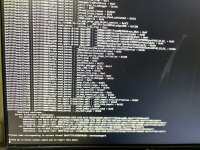
I have a desktop with AMD Ryzen 5600G (no graphics card), Motherboard Gigabyte B450MDS3H V2. Tried the Opencore method to dual boot MacOS & Windows 11 and getting the below kernal panic
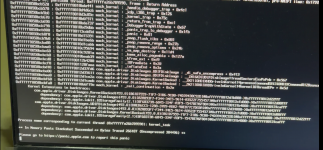
1768402662259.png

I have also tried the Olarila vanila image dual boot install using youtube video guide (
) but getting the error
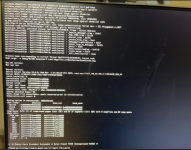
1768402696810.png
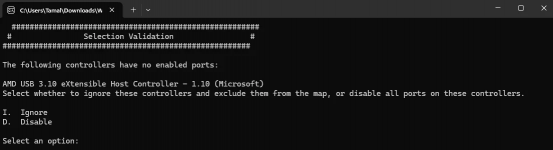
Also, while USB port detection I got this message which I didn't see on any tutorial videos. I've tried both Ignore & Disable options but the result is the same.
1768402734958.png
Can anyone help ?!
 
NVME Drive:
Which NVME drive are you using?
What is on the drive?
How is it formatted?
Do you have CSM disabled in your Bios?

Bluetooth:
Which Bluetooth module/dongle are you using?
Which kexts have you added to your OC EFI to allow the BT device to connect?
Have you added the Bluetooth NVRAM entries to your config.plist?

Apple drive formatting:
The macOS drive showing as empty in Windows is normal.
Windows doesn’t natively read APFS formatted drives.
You need to add a third-party driver/app for Windows to be able to read/write APFS or HFS+ drives.
 
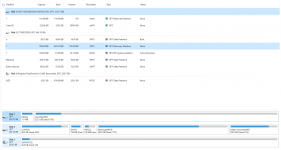
Here is the drive/SSD situation
1769266838850.png

Do you have CSM disabled in your Bios?
Yes I do.

Bluetooth:
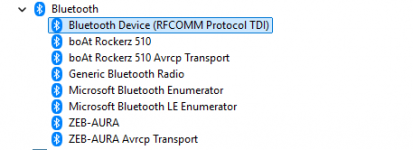
Which Bluetooth module/dongle are you using?

1769267053507.png


Which kexts have you added to your OC EFI to allow the BT device to connect?
Have you added the Bluetooth NVRAM entries to your config.plist?

I've attached the EFI that I used to install the macOS, but like I said in my last post I could not mount ESP as no drives are showing when I choose that option in OCAuxiliaryTools !
 

Attachments

You have some issues with your drive formatting:
1. The macOS drive should be HFS+ if running an older version, pre High Sierra.
2. The macOS drive should be formatted GPT/GUID & APFS if running any version since High Sierra.
3. As you have posted in the Sequoia forum, I assume that is the OS you are using.
4. Your macOS drive should not/never be formatted as ExFat.

Your Windows drive is a mess as far as formatting and the order of the partitions. Is this a cloned drive?
5. The ‘System’ partition should be first on the NVME drive, I.e. before the main NTFS partition containing the Windows OS. With 2 x additional ‘Microsoft’ partitions following the main Windows partition.
6. OpenCore will be looking for the Windows ‘System’ partition, in order to include an icon or text entry on the OC Boot screen.
7. If it doesn’t find it where it expects it to be located, or named as expected, then your Windows drive won’t be available via OpenCore.

With regards your Bluetooth module, you need to be more explicit about the make and model of the device. That Device Manager screen snip tells me nothing useful.

Not being able to mount the hidden EFI partition is down to you using the ExFat format on your macOS drive. The ExFat format doesn't create a 200MB EFI partition as the first partition on the disk. The partition it does create isn’t an EFI partition, which is full of data, it has the wrong name and format for an EFI partition. It should be an empty FAT32 formatted partition 200MB in size, which is created as part of the APFS format process.

The best thing you could do is to wipe and reinstall macOS, but this time use Disk Utility, which is available as part of the install process, to format the disk correctly, I.e. APFS & GUID/GPT.

Your choice what’s to do with your Windows disk. But a clean install wouldn’t hurt, as you want dual boot both OS’s from the OC boot screen.

Just make sure you backup anything you can’t reinstall from an existing backup.
 
I think there's a misunderstanding about my drive/SSD setup. Here's the details:

Current SSDs:
  • NVMe SSD: Windows 11 installed. I first tried installing macOS here by shrinking a partition and creating an exFAT one (per tutorials), but it failed (see my original post with errors).
  • SATA SSD: Had one data partition initially. I wiped it clean for macOS install.
What happened recently:
  1. Disconnected NVMe SSD, installed macOS Sequoia on SATA SSD—successfully.
  2. Couldn't mount SATA SSD in macOS (it didn't show up to copy EFI from pendrive). Also had Bluetooth issues like I mentioned in my previous post. (Attached screenshots for reference)
Current loop/problem:
  • Reconnected NVMe: Couldn't boot into macOS.
  • Disconnected NVMe again: Pendrive boot no longer shows the SATA macOS install drive to boot into—had to reinstall macOS.
  • Stuck: Can't dual-boot, and can't even boot macOS from SATA SSD without pendrive.
Any advice on fixing the SATA SSD mounting/EFI, dual-boot, and stable boot?

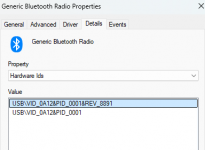
Regarding the bluetooth device, its from a budget Indian brand called Enter & below are the Hardware Ids

1769312599439.png
 

Attachments

So with the new macOS installation how have you formatted the SATA SSD, APFS?
Does it have a hidden EFI partition as the first partition?
Download and install Hackintool application, then post a screenshot showing the Disks Tab.


Still have no idea which Bluetooth device you are using. So can’t tell you if it will or won’t work in macOS. Just because it works in Windows there is no guarantee that it will work in macOS.

You need to increase the amount of RAM allocated for the AMD IGPU. 512MB is too low, it should be 1GB as a minimum, this is clearly stated on the NootedRed website. 2GB is a better split seeing as you have 16GB RAM available for the system.

Check that you have your system Bios setup for running macOS.

 
So with the new macOS installation how have you formatted the SATA SSD, APFS?
Yes


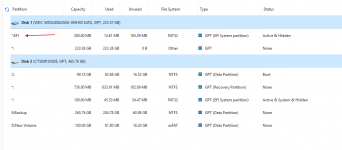
Does it have a hidden EFI partition as the first partition?
I can't tell ! I've attached a screenshot from the disk utility app in mac in my previous post, does that not show or indicate anything ? When I use Opencore configurator / OCAuxiliary tools to mount the drive where I installed macOS, the drive just doesn't appear to mount & transfer the EFI folder from the pendrive to it so that I can directly boot to macOS without the need of the pendrive. BTW, according to this screenshot taken from the Minitool partition app from Windows 11 I think it is there ...
1769354753260.png


Download and install Hackintool application, then post a screenshot showing the Disks Tab.
I will definitely do that, I have to disconnect my NVMe SSD & then boot through the pendrive & hope it boots to the installed macOS then I'll be able to do that.


You need to increase the amount of RAM allocated for the AMD IGPU. 512MB is too low, it should be 1GB as a minimum, this is clearly stated on the NootedRed website. 2GB is a better split seeing as you have 16GB RAM available for the system.
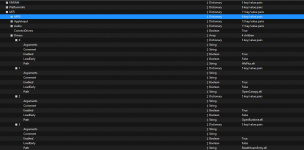
How do I do that ? BTW here is the screenshot of UEFI in the config.plist file that I used to install Sequoia.

1769353950661.png


Check that you have your system Bios setup for running macOS.

Ryzen and Threadripper(17h and 19h) | OpenCore Install Guide
I think I do have the BIOS setup for running macOS (as far as I understand). I've already shared the screenshot of most of the settings.
 
Last edited:
MacOS drive looks correct 👍
Windows drive still looks a mess!

Have you tried removing the Windows drive to see if the new macOS install boots correctly?
While doing this, download and install Hackintool application linked previously.
Use the Hackintool-Disks tab to mount the EFI partition on your macOS drive, you need to select the Down arrow icon located to the right of the macOS drive. Then enter your password for the action to progress. The normally hidden EFI partition will be displayed on the desktop. You can now copy the OpenCore EFI folder from your USB installer to the EFI partition of the macOS drive.

When you reboot the system you shouldn’t need the USB pen drive, as long as you select the macOS drive’s UEFI partition or the OpenCore option as the primary boot disk in your bios.
 
Have you tried removing the Windows drive to see if the new macOS install boots correctly?
Yes, as long as the USB installer is plugged in I'm able to boot & log into macOS. But when I reconnect my NVMe SSD sometimes it boots to macOS when the USB installer is plugged in & displays the login screen but when I enter the password it freezes then a black screen appears with only the cursor showing & then it reboots.


Use the Hackintool-Disks tab to mount the EFI partition on your macOS drive, you need to select the Down arrow icon located to the right of the macOS drive. Then enter your password for the action to progress. The normally hidden EFI partition will be displayed on the desktop. You can now copy the OpenCore EFI folder from your USB installer to the EFI partition of the macOS drive.
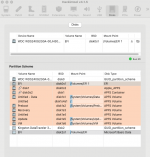
I've done what you said but still it won't boot without the USB installer ! Here is the screenshot of Hackintool-Disks tab
1769391652771.png

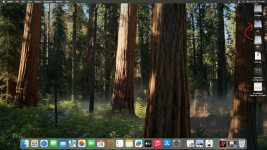
Also, here is a screenshot of my macOS desktop (with USB installer still connected)

1769391854135.png

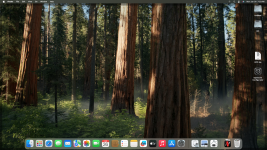
Without the USB installed connected

1769392523631.png

Despite this I'm still not able to boot to macOS without the USB installer/pendrive !
Please help !

Also, please guide me on how to increase the amount of RAM allocated for the AMD IGPU. Do I need a updated kext or change in config.plist or a new kext ?
 
Last edited:
To increase the amount of RAM available to your IGPU, you need to look in your bios and see what settings are available for the IGPU. Hopefully you can simply select a higher amount.

If that isn’t an option then you will need a Bios-Flasher like Smokeless-UMAF. I have used this on a couple of AMD Hacks, where the bios lacked the necessary options, I.e. they were hidden by the Bios manufacturer.


Just make sure you don’t go changing any settIngs that you don’t know about. You should only be looking to increase the amount of VRAM and nothing else.
 
What about the booting to macOS without USB installer plugged in ? Do you have a solution ?
 
Yes, copy the EFI folder from the USB pen drive to the EFI partition on the macOS drive, that is how everyone does it.
 
I did that (I think so) but still can't directly boot to macOS. When I disconnect the USB pen drive it boots to bios (when NVMe SSD is disconnected) or directly boot to Windows 11 without giving me any option to choose.

BTW, if I copied the EFI folder contents & pasted on the same place mistaking it for the EFI partition will it overwrite or just paste it as copy of BOOT & copy of OC ? Also, I copied & pasted like the below screenshot, I guess that's correct right !!!

1769430654571.png

So what's the solution here, is there a problem in mounting the EFI partition ? What could be the cause ?
 
I created an EFI folder inside the EFI partition & moved the boot and oc folders. Now I'm getting the boot menu but getting this error when trying to boot to macOS with both SSDs connected (my computer froze at this error screen the first time)

1769608543537.jpeg

I did a Reset NVRAM after this but now after some error the computer just restarts immediately & I couldn't see if this same error is showing or some new error is showing !
 
If you still have the OC EFI on your USB installer, use that to boot your system.

Once in macOS you can edit or remove the non-working EFI folder.
 
Hmm, sometimes it boots to macOS properly, sometimes it freezes when I enter the macOS login password in the login screen & restarts, sometimes it restarts before the login screen in macOS appears. So, not sure what is happening!

BTW, my bluetooth & wifi isn't working. I can live with the wifi not working but bluetooth I require, so if I were to buy a bluetooth usb adapter for my configuration what model & brand do you suggest that is guaranteed to work in this ? I'm looking for a cheaper one, not too expensive!
 
  AdBlock Detected
Sure, ad-blocking software does a great job at blocking ads, but it also blocks some useful and important features of our website. For the best possible site experience please take a moment to disable your AdBlocker.