
AMD IOMMU Driver (replacement of AppleVTD on AMD platform)

maz-1

New member
AMD OS X Member
Nov 15, 2026
3
0
1
CPU:
W0oWfKj0ORdqykN
https://github.com/hackintosh-stuff/AMDIOMMU
An experimental kext that gives macOS a real IOMapper on AMD platforms, so that I can use ConnectX-4 Lx NIC on my X570 motherboard. Mostly vibe coding.

To be able to attach to drivers that wants IOMapper support, there are two ways:
  • Install AMDMapperProbe.kext and append amdiommu=auto-attach to boot args. Works with drivers that only call IOMapper::copyMapperForDevice() to receive the mapper.
  • Install Lilu.kext, AMDMapperHook.kext, AMDMapperProbe.kext and append amdiommu=passive to boot args. Works with drivers that start DMA before it asks for a mapper.

It only attaches to Mellanox ConnectX-4 Lx and Realtek RTL812x series by default. Support for other PCIe devices or motherboards other than X570 is unknown.
To attach to devices with specific hardware id, you can either:
  • Add boot args like amdiommu_devices=n2200,n2201 (id is in decimals)
  • Append ids to kext's Info.plist (key AMDMapperProbeDevices).
 

Attachments
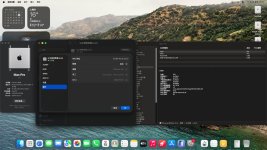
  • screenshot-2026-11-06-0523.jpg.ee33a59f77ade918a71ee7b82e3a059f.jpg
    screenshot-2026-11-06-0523.jpg.ee33a59f77ade918a71ee7b82e3a059f.jpg
    299 KB · Views: 6
Last edited by a moderator:
  • Wow
Reactions: etorix
That is a hell of a contribution for a first post! 👏

Practical questions: Beside the kext(s) and boot-args, what changes are required for the EFI? Obviously, DisableIOMapper=false. Does it changes MmioWhitelist?

More theoretical questions: How goes "vibe-coding" at such a fine low level? Do you point an agent at analysing MMIO in different OS to analyse the differences? Do you have a human-readable explanation of the differences between VT-d and AMD-V, and of teh conseqeunces for AppleVTD?
I do added "Generic: PCI root is a 0x1000 page memory region used by some types of firmware" entry, not sure if it makes any difference
 
That is a hell of a contribution for a first post! 👏

Practical questions: Beside the kext(s) and boot-args, what changes are required for the EFI? Obviously, DisableIOMapper=false. Does it changes MmioWhitelist?

More theoretical questions: How goes "vibe-coding" at such a fine low level? Do you point an agent at analysing MMIO in different OS to analyse the differences? Do you have a human-readable explanation of the differences between VT-d and AMD-V, and of teh conseqeunces for AppleVTD?
I do use another host machine to control the testbench. The testbench has NanoKVM installed to be remote-controlled without os level support. Debian is also installed on testbench to restore OpenCore configuration when bootloop happens. IDA Pro and otool are used for reverse-engineering.
IOMapper is an abstract layer for device drivers to access IOMMU functionalities, the underlying driver can be AppleVTD on Intel platform or Apple Silicon equivalent, so inplementing an AMD equivalent is totally doable.
 
✖
  AdBlock Detected
Sure, ad-blocking software does a great job at blocking ads, but it also blocks some useful and important features of our website. For the best possible site experience please take a moment to disable your AdBlocker.